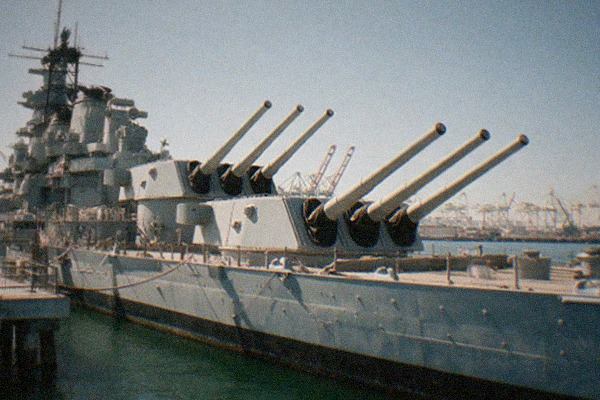
Battleship IOWA
San Pedro
Battleship IOWA in San Pedro: ticket prices from $30, hours, parking, transit directions and what to see aboard the historic ship. Plan your visit.
from $30per person, live price on the listing Check availability →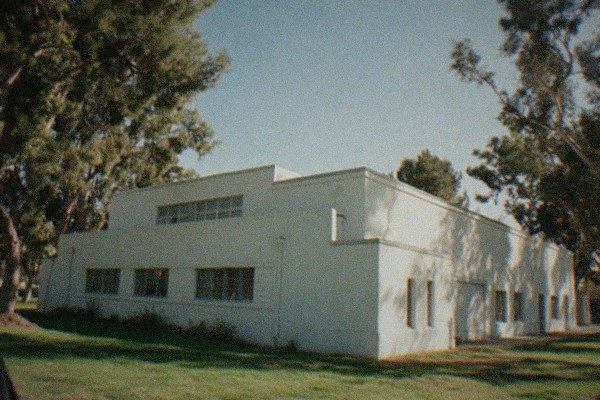
Free entry, no ticket needed.
The Wende Museum in Culver City is free to visit, open Friday to Sunday. Here is what it holds, how timed entry works, where to park, and how long to allow.
Plan your visit →Opens the museum's own visitor page. There is nothing to book: the permanent collection is free.
Behind the storefront facade of the former Culver City Armory on Culver Boulevard sits one of the strangest collections in Los Angeles: the everyday material of Cold War Eastern Europe. The Wende Museum holds the busts, banners, surveillance equipment, kitchen appliances and classroom posters that emerged when the Berlin Wall fell and the German Democratic Republic dissolved, objects too ordinary for national museums and too political for attics. Its centerpiece is a set of original Wall segments, reinstalled in the open air outside the building. Admission to all of it is free, and the museum is open to walk-in visitors on Friday, Saturday and Sunday afternoons.
The Wende Museum is a museum of Cold War history and culture in Culver City, holding the art, artifacts and everyday objects of life behind the Iron Curtain, with a particular focus on the Soviet Union and East Germany. General admission is free. It is the only museum of its kind in the Los Angeles area and one of the few anywhere devoted to the material culture of the Eastern Bloc.
The name comes from the German word Wende, meaning "turn" or "turning point," the term Germans use for the period around 1989 and 1990 when the Berlin Wall fell, communist governments across Eastern Europe collapsed and Germany reunified. The museum was founded to preserve what that collapse left behind: not the state treasures that national museums absorbed, but the ordinary and official material of daily life that was suddenly worthless and headed for the landfill.
That mandate produces a collection unlike anything else in the city. Alongside paintings and sculptures by artists who worked under censorship, the museum gathers school textbooks, propaganda films, factory banners, radios, vacuum cleaners, Olympic memorabilia, border-crossing documents and surveillance equipment. The objects are displayed in the former National Guard Armory, a 1949 building that the museum restored and reopened, and the setting itself is part of the story: a utilitarian mid-century structure housing a vanished state's leftovers.
The best-known installation stands outside, where original segments of the Berlin Wall are arranged in the museum's garden as they once stood in the divided city, graffiti and all. Visitors can walk along them, read the interpretive panels and see the Wall at actual scale, which is a rarer experience than it sounds: genuine segments exist in scattered locations worldwide, but few places present them as a full run rather than a single trophy slab.
The Wende also runs a program of temporary exhibitions, lectures, film screenings and artist projects that connect Cold War material to present-day questions about borders, propaganda and surveillance. Its research library and archives draw scholars, but the galleries are built for general visitors, and the interpretive text throughout is written for people with no background in Eastern European history.
For visitors building an itinerary of Los Angeles history museums, The Wende sits in an unusual position. It shares a focus on difficult 20th-century history with the Museum of Tolerance in Pico-Robertson, and its free admission makes it a natural pairing with other no-cost institutions such as The Getty Center, though the two could not feel more different: one is a hilltop art campus above Brentwood, the other a modest armory full of socialist-era kitchen tables.
General admission to The Wende Museum is free. There is no door price and no ticket to buy for the permanent collection. What is not free is the surrounding logistics: parking in the area is paid, and any timed-entry reservation or special-exhibition ticket the museum may require is arranged through its own website, wendemuseum.org. This page carries no buy button because there is nothing to buy here.
The free-admission policy is straightforward. The museum's own visit page at wendemuseum.org/visit is the authoritative source for whether a timed reservation is currently needed, and it is the right place to reserve a slot before traveling. Museums that are free frequently manage capacity through free timed tickets rather than paid ones, and The Wende's public days are limited to Friday, Saturday and Sunday, so demand on those three days can exceed what walk-up entry absorbs.
What is worth spelling out is the honest cost picture, because "free museum" in Los Angeles almost never means a free visit. The pattern repeats across the city: The Getty Center charges nothing for admission but $25 per car for parking, and the Battleship IOWA in San Pedro sells a real ticket but is reached by a drive to the harbor. At The Wende, the costs that can catch a visitor out are parking near the museum in Culver City and any separately ticketed special exhibition or program. Prices for special exhibitions, when they exist, are posted on the museum's own site and are not reproduced here because they change with each show.
| Item | Price | Notes |
|---|---|---|
| General admission | Free | No door price for the permanent galleries |
| Timed reservation | See the official site | Reserve at wendemuseum.org/visit if required |
| Special exhibitions and programs | See the official site | Occasionally ticketed separately from free admission |
| Parking | Paid, price on the official site | Street and lot parking around Culver Boulevard |
There is no pass angle to this museum. It is already free, so Go City Los Angeles or any other attraction pass adds nothing here, and passes should be evaluated against the paid museums on an itinerary instead. And to close a common misconception: there is no Los Angeles CityPASS covering museums. Southern California CityPASS is a theme-park product for Disneyland, SeaWorld and LEGOLAND, and it has nothing to do with institutions like this one.
For context on how this museum fits the free tier of Los Angeles culture: it is one of a set of genuinely free museums in the city, alongside MOCA Grand Avenue downtown, the Hammer Museum in Westwood, the Fowler Museum at UCLA, the California African American Museum in Exposition Park and LA Plaza de Cultura y Artes near Olvera Street. Each of those carries its own catch, usually parking, and The Wende's catch is both parking and a very short public week.
Parking around The Wende Museum in Culver City is paid, and no verified figure for the cost exists in this site's research. The museum's own visit page at wendemuseum.org/visit is the place to check current parking recommendations and any validated-lot arrangements. Visitors should budget for paid street or lot parking in the Culver Boulevard corridor and should not expect free museum parking.
This site treats parking as the single most important planning fact for Los Angeles museums, because the gap between a free museum and paid parking is exactly where visitor budgets go wrong. The rule applied here is strict: no parking price is printed for The Wende Museum because none has been verified, and carrying a figure over from another museum would be a guess. What can be said with confidence is that the museum sits at 10808 Culver Boulevard in the middle of Culver City's busy downtown-adjacent commercial district, an area of metered street parking and city and private lots where free all-day parking is scarce.
Culver City has invested heavily in managed parking, and the blocks around Culver Boulevard and the nearby Arts District fill quickly on weekends, which are exactly the days The Wende is open to the public. Friday through Sunday, from 10am to 5pm, is the museum's entire public week, so every visitor the museum gets is arriving during peak parking demand for restaurants, the Culver City galleries and the surrounding offices. Arriving near the 10am opening gives the best odds of convenient street parking and a quieter gallery.
Practical guidance, hedged where the facts are not verified: check the museum's own site before visiting for its current parking guidance, as institutions in this district sometimes negotiate rates with nearby lots. Read meter signs carefully, because Culver City meters and time limits vary block by block and enforcement is active. If a nearby lot quotes an all-day rate, that is usually the safer choice than feeding a two-hour meter for a museum visit that deserves more time than that.
For comparison, the verified parking figures elsewhere in this guide's coverage show how wide the range runs in Los Angeles: The Getty Center and Getty Villa charge $25 per car, dropping to $15 after 3pm, the Hammer Museum runs roughly $8 to $9 for the first hours with validation and a daily maximum around $22 to $30, and the Fowler Museum at UCLA is about $5 an hour up to a $17 daily maximum. The Wende's parking cost sits outside that verified set, which is why the instruction here is simply: it is paid, and the official site carries the current detail.
The Wende Museum is open to the public Friday, Saturday and Sunday only, from 10am to 5pm. It is closed Monday and Tuesday, and Wednesday and Thursday are reserved for school tours rather than general visitors. That three-day public week is the single most important scheduling fact on this page, and it is the reason advance planning matters more here than at most Los Angeles museums.
The Wednesday-and-Thursday school-tour arrangement is unusual and worth understanding before setting out. Those midweek days are not quiet public days; they are closed to walk-in visitors because the museum runs organized education programs. A traveler who assumes a free museum is open daily and arrives on a Tuesday, Wednesday or Thursday will find the doors shut, so the calendar below is the thing to check first.
| Fact | Detail |
|---|---|
| Address | 10808 Culver Boulevard, Culver City, CA 90230 |
| Area | Culver City |
| Open to the public | Friday to Sunday, 10am to 5pm |
| Closed | Monday and Tuesday |
| Wednesday and Thursday | School tours, not general admission |
| Admission | Free |
| Parking | Paid, current details on the official site |
| Time to allow | Roughly 1.5 to 2.5 hours for the galleries and Wall segments |
| Reservations | Check wendemuseum.org/visit before visiting |
The museum's own visit page at wendemuseum.org/visit is the authoritative source for hours, and it should be checked close to the date of travel. Museums adjust holiday schedules, install exhibitions behind closed doors and occasionally close galleries for events, and a three-day public week leaves little slack: a single extra closure can wipe out a visitor's only window.
For itinerary planning, the short week shapes what pairs well with The Wende. The Museum of Tolerance closes Friday and Saturday, which is almost the mirror image of The Wende's schedule, so the two should not be planned for the same weekend day without checking the Tolerance's Sunday hours. The Museum of Tolerance and The Wende together cover the darkest and the strangest chapters of 20th-century authoritarianism, and visitors with a serious interest in that history often split them across separate days.
Closer to home in Culver City, the Museum of Jurassic Technology sits about a mile and a half east on Venice Boulevard and closes Monday, Tuesday and Wednesday, meaning it overlaps with The Wende only on Sunday. A Sunday pairing of the two is one of the more distinctive museum days Los Angeles offers: a cabinet of curiosities in the morning and Cold War material culture in the afternoon, both in the same small city.
The essential sights at The Wende Museum are the original Berlin Wall segments in the outdoor garden, the permanent galleries of Eastern Bloc art and everyday objects inside the restored armory, and the rotating special exhibitions that connect Cold War material to contemporary politics. Visitors should allow roughly 1.5 to 2.5 hours, longer if a special exhibition or a public program is running.
Start outside. The Wall segments are the museum's signature installation and they cost nothing to see, standing in the garden as a full run rather than a single slab. Walking their length gives the scale that photographs never convey: roughly twelve feet of concrete and pipe that divided a city for twenty-eight years, with original graffiti on the western face. Panels explain the Wall's construction, its fall in November 1989 and the fate of its fragments, which were dispersed worldwide in the years after.
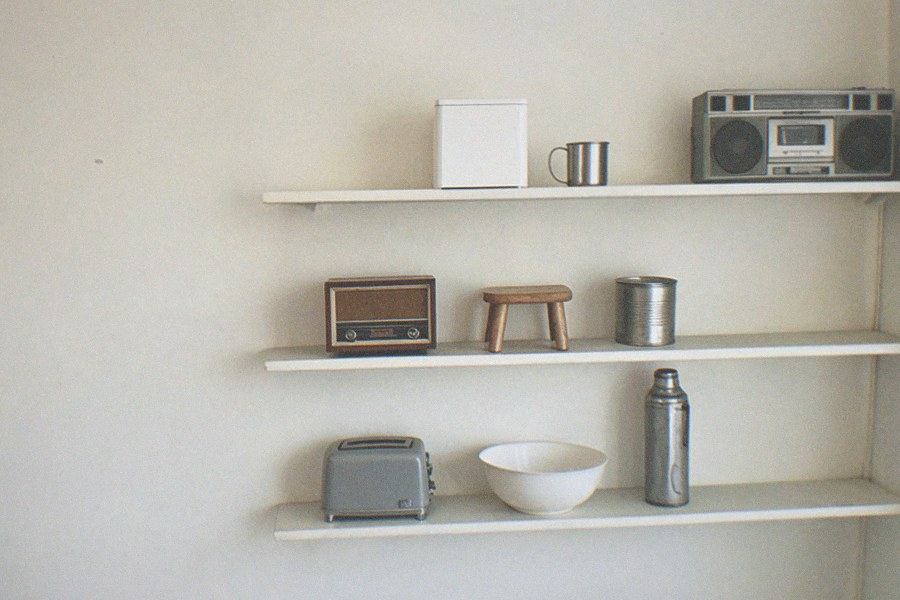
Inside, the galleries work as a walk through a vanished everyday. Displays of socialist-realist painting and officially sanctioned art sit near the unofficial work of artists who painted around censorship. Cases of consumer goods, kitchenware, radios and television sets show what "normal" looked like in a planned economy, and political ephemera, banners, portraits and pioneer-organization material show how the state decorated itself. The surveillance material is the section visitors most often remember, a reminder that the same state that made the vacuum cleaners was also watching its citizens.
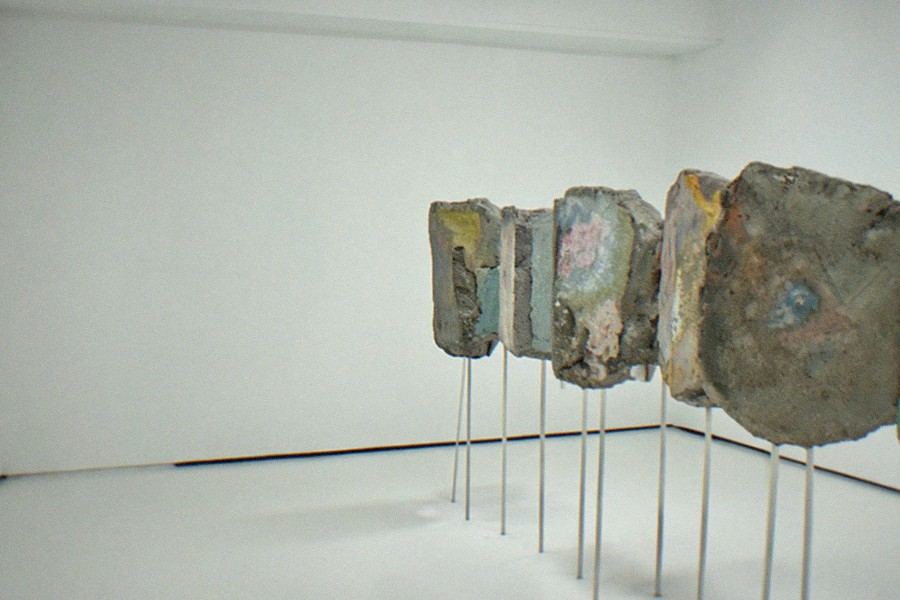
The special-exhibition program changes regularly and is the reason repeat visits pay off. Shows have ranged from Cold War design and Olympic history to contemporary artists responding to the archive, and the museum's public events, film screenings and lectures are listed on its own site. Some programs are ticketed separately from free general admission, which is the honest "not free" note for this museum: the galleries cost nothing, but an evening program or a special show may carry its own price, posted at wendemuseum.org/visit.
Because the museum is compact and the interpretation is generous, it rewards slow reading rather than rushing. A first pass through the galleries takes most visitors about an hour; the Wall garden, the shop and any special exhibition add the rest. Visitors with a deeper interest in the period should ask staff about the archives and library access, which is a research resource rather than a tourist attraction but reflects how much more the institution holds than it can display.
One planning note for families: the material includes propaganda and surveillance history that older children engage with well, but the museum is a quiet, text-heavy institution rather than a hands-on one. Families combining a visit with a Culver City weekend will find the surrounding blocks full of restaurants, which makes the trip easy to build into a half day.
The Wende Museum sits at 10808 Culver Boulevard in Culver City, reachable by Los Angeles Metro rail via the E Line to the Culver City area, with bus connections along Culver Boulevard, and current route and schedule details are at metro.net. Because the museum is only open Friday to Sunday, transit visitors should plan around the three-day public week and verify the walk or bus connection from the rail station before setting out.
Los Angeles County Metro operates the E Line, the light-rail route that runs between downtown Los Angeles and Santa Monica through the West Adams and Culver City corridor, and Metro's trip planner at metro.net is the authoritative source for the station-to-museum connection that fits a given starting point. Culver City's own bus network, Culver CityBus, also serves the area and connects with Metro services. The museum's visit page at wendemuseum.org/visit carries its own current transit guidance and should be checked alongside Metro's, since institutions in this district often update directions as services change.
The transit case for this museum is stronger than for most in Los Angeles. Culver City is one of the county's better-served mid-city areas, the museum sits on a main commercial boulevard rather than up a hill or behind a harbor, and the surrounding blocks are walkable, with restaurants and other cultural stops close by. A visitor arriving by rail avoids the paid-parking question entirely, which is the one real cost of a visit here.
For visitors structuring a car-free day, the honest geometry of Los Angeles still applies. The Wende pairs naturally with the Museum of Jurassic Technology on Venice Boulevard, but reaching the Battleship IOWA in San Pedro or the The Getty Center in Brentwood from Culver City is a long cross-town journey by transit, and those pairings are better done on separate days or by car. Within Culver City itself, a Friday-to-Sunday itinerary built around The Wende, the surrounding galleries and the city's restaurant blocks is entirely feasible without driving.
Two practical cautions finish the transit picture. First, check the return schedule: the museum closes at 5pm, and a Sunday visit that ends near closing should not depend on an infrequent evening bus connection. Second, remember the school-tour days: Wednesday and Thursday arrivals will find the museum closed to the public no matter how well the transit connection works, so the calendar governs the trip before any route planning does.
Yes. General admission to The Wende Museum is free, with no door price for the permanent galleries. What is not free is parking in the Culver City area around the museum, and special exhibitions or programs may be ticketed separately. Current prices for anything beyond general admission are posted on the museum's own site at wendemuseum.org/visit.
The Wende Museum is open to the public Friday, Saturday and Sunday only, from 10am to 5pm. It is closed Monday and Tuesday, and Wednesday and Thursday are reserved for school tours rather than general visitors. Because the public week is just three days, check the museum's own visit page before traveling in case of holiday changes.
Possibly. Admission is free, but the museum may manage capacity with free timed reservations, and any special exhibition can carry its own ticket. The authoritative answer is on the museum's own visit page at wendemuseum.org/visit, which is where a timed slot should be reserved if one is required for the date of travel.
Parking around the museum at 10808 Culver Boulevard in Culver City is paid, and no verified price figure exists for it. The surrounding district has metered street parking and city and private lots that fill on weekends, which are the museum's only public days. Check the museum's own site for current parking guidance and read meter signs carefully.
Roughly 1.5 to 2.5 hours covers the permanent galleries, the Berlin Wall segments in the outdoor garden and the shop, with more time needed if a special exhibition or public program is running. The museum is compact but text-rich, so slow reading rewards visitors. Arriving near the 10am opening also helps with street parking.
The Wende Museum is known for its collection of Cold War material culture, especially objects from East Germany and the Soviet Bloc: everyday consumer goods, propaganda, surveillance equipment, official art and political ephemera. Its signature installation is a run of original Berlin Wall segments standing in the outdoor garden at the restored Culver City Armory.
Yes. The museum sits on Culver Boulevard in Culver City, served by Metro's E Line rail corridor and connecting bus services, with Culver CityBus also operating in the area. Route and schedule details are at metro.net, and the museum's own visit page carries its current transit guidance. Transit visitors avoid the paid-parking cost entirely.
It suits older children and teenagers better than young kids. The museum is quiet and text-heavy rather than hands-on, but its subjects, propaganda, everyday life behind the Iron Curtain and the Berlin Wall segments outside, engage school-age visitors studying 20th-century history. Note that Wednesday and Thursday school-tour days are not open to the public.
San Pedro
Battleship IOWA in San Pedro: ticket prices from $30, hours, parking, transit directions and what to see aboard the historic ship. Plan your visit.
from $30per person, live price on the listing Check availability →
Pico-Robertson
Planning a visit to the Museum of Tolerance in Pico-Robertson? Ticket prices, hours, parking, transit options and what to expect inside this LA human-rights museum.
from $20.52per person, live price on the listing Check availability →
Griffith Park
Autry Museum of the American West in Griffith Park: $20 admission, Free First Wednesdays, Monday closures, parking, transit and how long to allow for a visit.
Official tickets →