Natural History Museum LA tickets from $18: dinosaur halls, Exposition Park parking, hours, the first-Tuesday closure and LA County free afternoons, explained.
Opens the official listing with live dates and prices. Book there; nothing is charged on this site.
Area
Exposition Park
Theme
Science & nature
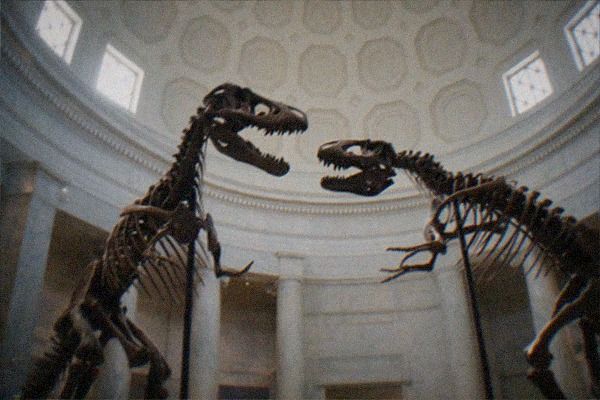
The Natural History Museum of Los Angeles County guards the western edge of Exposition Park, and its dinosaur halls are what most visitors remember longest: full mounted skeletons under high ceilings, including a Tyrannosaurus rex growth series that shows the animal from hatchling to adult. The building itself is a 1913 landmark, and its rotunda has appeared in films from Citizen Kane to dozens of others. Outside the doors, the park continues with the California Science Center next door and the Rose Garden across the lawn. The museum holds roughly 35 million objects and specimens, from gemstones to insect and bird collections, and it is one of the largest natural history museums in the United States. It sits in Exposition Park at 900 Exposition Boulevard, a short ride from Downtown Los Angeles.
How Much Do Natural History Museum Tickets Cost?
General admission is $18 at the door, and the same ticket is available from $18 through the museum's booking platform. The listing carries a 4.6 rating across 522 reviews. Tickets can be bought on arrival, but checking availability on the listing before traveling is the simpler route on busy days.
The Natural History Museum is one of Los Angeles County's paid museums, and unlike some of its Exposition Park neighbours it charges everyone. The two institutions beside it split the difference: the California Science Center's permanent galleries are free, while the Natural History Museum's ticket covers its dinosaur halls, gem and mineral displays, and the nature gardens. That price contrast matters for families planning a day in the park, because a combined visit can mean one paid museum and one free one within a five-minute walk.
LA County residents have a standing free window: free admission on weekday afternoons, quoted as 3pm to 5pm, available on site only. That means no online booking for the free window, and proof of County residence is checked at the entrance. Visitors from outside the county do not qualify, and the window does not apply on weekends. It is worth confirming the current hours on the museum's own ticketing page before a visit, since the window is tied to closing time.
Ticket
Price
General admission (door)
$18
General admission (booking platform, from)
$18
LA County residents, weekday afternoons (on site only)
Free
Special exhibitions are sometimes ticketed separately from general admission. Where that applies, the museum's own site lists the add-on price, and the booking platform shows what the base ticket includes. There is no Los Angeles CityPASS that covers this museum; the pass that does exist for Los Angeles attractions is Go City, and the museum's own ticket page is the authoritative source for what a given ticket covers on any given day.
What Are The Opening Hours And The Closed Day?
The Natural History Museum is closed on the first Tuesday of the month. Every other day it opens on a daily schedule published on the museum's own site, and the LA County free window runs from 3pm to 5pm on weekday afternoons.
The first-Tuesday closure is unusual among Los Angeles museums, most of which close on a fixed weekday. It means a Tuesday visit is fine most of the time, but the first Tuesday of any month is a guaranteed no-go. Anyone planning a multi-museum day around Exposition Park should check the neighbouring museums' schedules too: the California Science Center is open daily, and the California African American Museum closes on Mondays. A weekend or a mid-week Tuesday works for all three.
Hours can shift for special exhibitions, seasonal programming and holiday weeks, so the museum's own site is the source to trust for the exact opening and closing times on a specific date. The 3pm-to-5pm resident window only works if the museum is still open at 3pm, which is another reason to verify the day's hours rather than assuming a standard schedule.
The dinosaur halls are the museum's centrepiece, with mounted skeletons arranged across the ground floor galleries.
For visitors pairing museums, the same Exposition Park stop serves the California Science Center and the California African American Museum, so one arrival time can anchor a full afternoon across all three institutions.
Where Do You Park And What Does Parking Cost?
Parking at Exposition Park is paid, in lots on the park grounds around the museum. No verified per-car figure is available for this museum's lots, so treat parking as a separate cost from the $18 admission and confirm the current rate on the museum's own site before arriving.
The lots sit directly around the Exposition Park campus, which is both convenient and the catch: on days when the park hosts a game or event at the adjacent stadium, demand for the same lots rises sharply. Arriving early in the day, or on a weekday afternoon when the resident free window opens at 3pm, gives the best chance of a close-in space without circling.
The transit alternative is one of the best in the city for museum-goers. The Metro E Line stops at Expo/Vermont and Expo/USC, both within a short walk of the museum's entrance, and the line runs from Downtown Los Angeles through to Santa Monica. Schedules and fares are on metro.net. For anyone staying Downtown, the train is often faster than driving to the park and paying for a space, and it removes the parking question entirely.
Visitors driving in should budget for parking as a real line item, not an afterthought. The pattern across Los Angeles museums is that parking is where the cost concentrates: at the Getty Center the car is $25 while admission is free, and at Exposition Park the admission is $18 while the lot is a separate, fluctuating charge. Planning both numbers in advance is the difference between a calm arrival and a rushed one.
What Is There To See Inside The Museum?
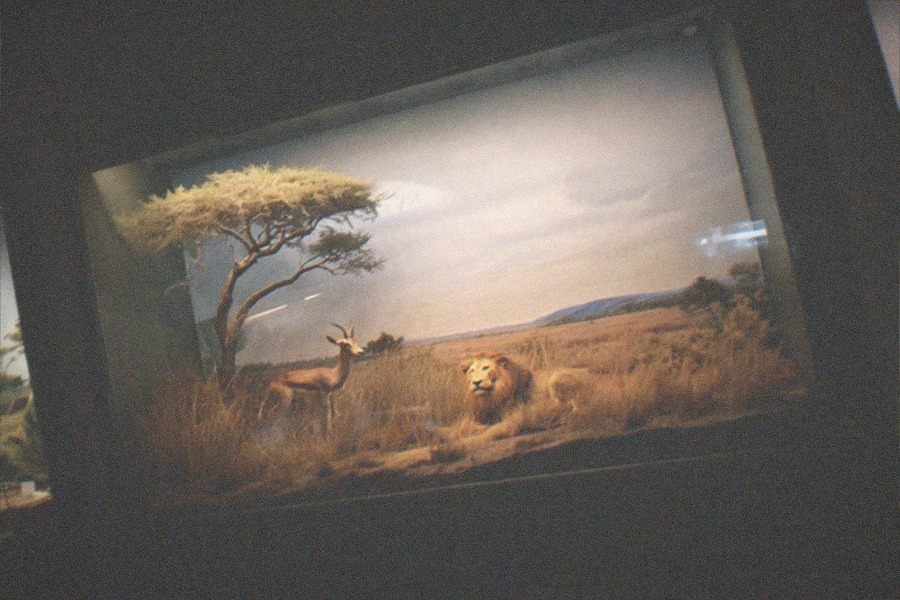
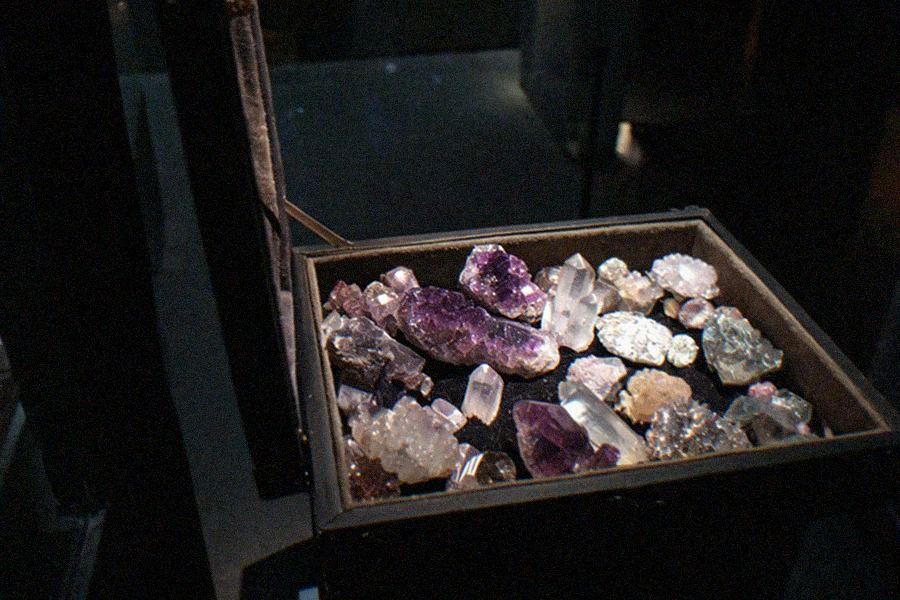
The headline draw is the dinosaur collection, including a T. rex growth series and extensive fossil halls. Beyond the dinosaurs, the museum holds gem and mineral galleries, diorama halls of mammals and birds, an insect collection, and outdoor nature gardens.
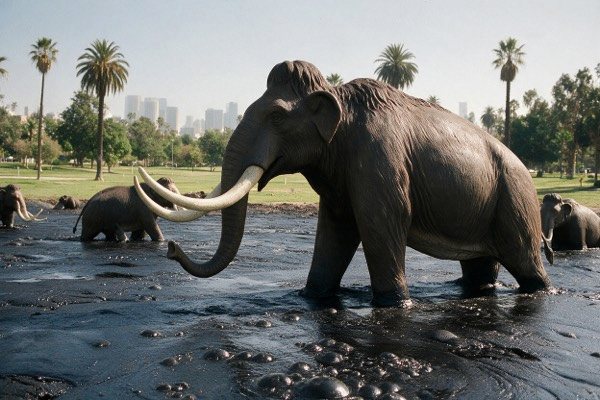
The Dinosaur Hall is the room most visitors head for first, and the growth series, showing three ages of Tyrannosaurus rex, is the kind of display few museums can mount. The fossil galleries extend beyond the marquee skeletons to marine reptiles and Ice Age mammals, which links neatly to a place further up Wilshire Boulevard: the La Brea Tar Pits, where the same Ice Age fauna is being excavated from asphalt. Note that the Tar Pits museum building itself is closed for renovation, with the outdoor park and excavator tour carrying the experience there, so the Natural History Museum is currently the indoor place to see LA's fossil story told in full.
The Gem and Mineral Hall is the second major stop, with specimens displayed in a vault-like gallery that includes some of the largest crystals shown in any US museum. The mammal and bird diorama halls preserve a century-old style of exhibit craft that many visitors find unexpectedly moving, and the Becoming Los Angeles exhibit traces the region's ecological and human history.
Outdoors, the Nature Gardens turn several acres of the grounds into a working urban habitat, planted to attract local pollinators and birds. It is included with admission and makes a natural mid-visit break, especially for families with children who need to run between galleries.
The 1913 rotunda is the museum's original entrance hall, with marble floors and a colonnaded dome.
Allow roughly two to three hours for a full circuit of the museum, longer if the gardens are on the itinerary or if a special exhibition is running. Families with young children routinely spend half a day, since the dinosaur halls alone hold attention for an hour or more.
Is The Natural History Museum Good For Families And Kids?
Yes. The dinosaur halls, the insect collection and the outdoor gardens make this one of the most child-friendly museums in Los Angeles, and it is a frequent first-museum experience for LA families.
The layout suits short attention spans: the biggest draws are clustered near the entrance, the galleries are wide enough for strollers, and the gardens give an unstructured break between exhibits. The museum runs dedicated programming for children, with discovery centers and hands-on spaces aimed at younger visitors; the current schedule is on the museum's own site.
The Exposition Park setting compounds the appeal. A family can park once, spend the morning with the dinosaurs, walk next door to the California Science Center for its free permanent galleries, and finish in the Rose Garden. Two museums, one parking charge, one afternoon. The Science Center's IMAX films and special exhibitions are ticketed separately, so the free portion is the permanent galleries, but that alone pairs well with a Natural History Museum visit.
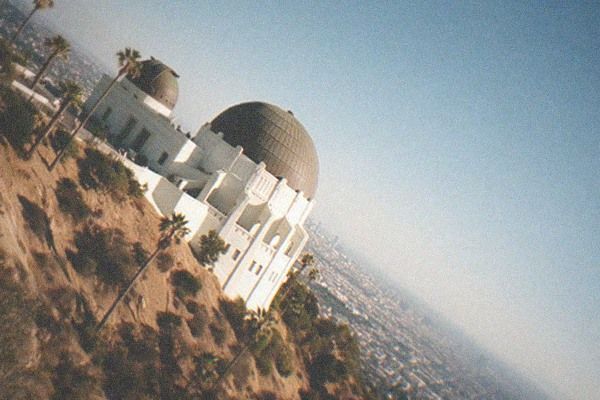
For older children and teenagers, the fossil preparation lab and the visible research collections give the museum a working-scientist feel rather than a static one. Visitors whose interests lean toward astronomy rather than paleontology can round out the science theme with the Griffith Observatory, whose building admission is free and whose planetarium shows are ticketed, a mirror image of the Natural History Museum's all-in-one paid ticket.
How Do You Get There And Plan The Visit?
The museum is at 900 Exposition Boulevard, on the western edge of Exposition Park, reachable by car with paid parking or by the Metro E Line to Expo/Vermont or Expo/USC. Plan on two to three hours inside, and avoid the first Tuesday of the month.
From Downtown Los Angeles, the E Line is the simplest approach: the stations are a short walk from the entrance and the ride avoids the parking question altogether. From the west side, the same line runs in from Culver City and beyond. Current timetables and fares are on metro.net. Drivers should enter the park from Exposition Boulevard or Figueroa Street and follow signs to the museum lots, remembering that rates are not published here and should be confirmed on the museum's own site.
At A Glance
Detail
Address
900 Exposition Boulevard, Los Angeles, CA 90007
Area
Exposition Park
Hours
on the official site
Closed
First Tuesday of the month
Parking
Paid lots on site; current rate on the official site
Time to allow
2 to 3 hours
Transit
Metro E Line, Expo/Vermont or Expo/USC
Ticketing is straightforward: buy at the door, buy in advance from $18 on the booking platform, or, for LA County residents, arrive on a weekday afternoon between 3pm and 5pm and take the free on-site admission. The booking panel at the top of this page handles advance purchases, and the museum's own ticket page carries the authoritative details on what each ticket includes.
Pairing suggestions depend on transport. On transit, the California Science Center and the California African American Museum are both in the park, so a single E Line trip covers three museums. By car, the same parking lot serves all three, making Exposition Park one of the few places in Los Angeles where a multi-museum day does not mean multiple parking charges.
Questions People Ask
How much are Natural History Museum tickets?
General admission is $18 at the door, and tickets are available from $18 through the booking platform. LA County residents can enter free on weekday afternoons, quoted as 3pm to 5pm, on site only, so the free window cannot be booked online.
What day is the Natural History Museum closed?
The museum closes on the first Tuesday of the month. Unlike most Los Angeles museums, which close on a fixed weekday, this one is open on other Tuesdays, so the closure date moves through the calendar and is worth checking before any Tuesday visit.
Is there free admission for LA County residents?
Yes. LA County residents get free admission on weekday afternoons, quoted as 3pm to 5pm, on site only. Proof of County residence is checked at the entrance, and the window does not apply on weekends or to visitors from outside the county.
Where do I park for the Natural History Museum?
Parking is in the paid lots on the Exposition Park grounds around the museum. No verified rate is published for these lots, so confirm the current price on the museum's own site before arriving, and expect higher demand on stadium event days.
Can I take the Metro to the Natural History Museum?
Yes. The Metro E Line stops at Expo/Vermont and Expo/USC, both a short walk from the entrance, with schedules and fares on metro.net. The line runs from Downtown Los Angeles, which makes transit a practical alternative to paying for parking.
How long should I spend at the Natural History Museum?
Plan on two to three hours for the main galleries, including the dinosaur halls and the gem and mineral displays. Families with children often stay half a day, especially when the outdoor Nature Gardens are part of the visit.
Is the Natural History Museum good for kids?
Yes. The dinosaur collection, including the T. rex growth series, the insect displays and the hands-on spaces make it one of the most child-friendly museums in Los Angeles, and the adjacent California Science Center's free permanent galleries extend the day further.
What else can I visit near the Natural History Museum?
The California Science Center and the California African American Museum are both inside Exposition Park, within a short walk and sharing the same parking lots. The La Brea Tar Pits are a separate trip up Wilshire Boulevard, though its museum building is closed for renovation and the outdoor park is what is open there.
Aquarium of the Pacific tickets from $50, open daily in Long Beach's Rainbow Harbor. Parking, hours, how long to allow, and what to see at Southern California's big aquarium.
What is open at La Brea Tar Pits during the museum renovation: the Lake Pit, Hancock Park, parking, transit and how long to allow on Wilshire Boulevard.