The Getty Villa
Pacific Palisades
The Getty Villa is free with a timed reservation. Parking is $25 per car, $15 after 3pm. See prices, hours, what to see and how to plan a visit.
Free entry, no ticket needed.
Free entry, no ticket needed.
MOCA Grand Avenue is free to enter, with advance reservation recommended. Honest guide to what is not free: parking, timed tickets and the closed Geffen Contemporary.
Plan your visit →Opens the museum's own visitor page. There is nothing to book: the permanent collection is free.
A curved sandstone building on Grand Avenue holds the only museum in Los Angeles devoted entirely to contemporary art. MOCA Grand Avenue sits directly across the street from The Broad and a short walk from Walt Disney Concert Hall, and its galleries hold works made after 1940 by artists such as Jackson Pollock, Mark Rothko and Jean-Michel Basquiat. General admission is free, which surprises many first-time visitors expecting a paid ticket booth. The honest catches are smaller but real: the museum recommends an advance reservation because on-site tickets are limited, parking in Bunker Hill is paid, and the museum's second location, the Geffen Contemporary at MOCA in Little Tokyo, is temporarily closed. This page lays out exactly what is free, what is not, and how to plan the visit.
Yes. General admission to MOCA Grand Avenue is free for everyone, with no resident requirement, no weekday window and no after-3pm rule. The museum recommends booking an advance reservation because on-site tickets are limited on busy days, and the reservation itself is also free. Nothing about walking in the door costs money.
This makes MOCA one of the free museums in a city where that status is genuinely valuable. Downtown Los Angeles has a cluster of free and paid institutions within a few blocks of one another, and MOCA Grand Avenue sits in the middle of it. The address is 250 South Grand Avenue, Los Angeles, CA 90012, in the Bunker Hill neighborhood, directly across Grand Avenue from The Broad, which is also free with a timed ticket.
The free policy is not a limited-time promotion or a monthly window. It is standing policy for general admission to the permanent collection galleries. The museum's own visit page at moca.org/visit is where reservations are made and where any change to the policy would be posted first, so it is worth a quick check before traveling.
What is not covered by free general admission is a separate matter, and it is the part worth planning for. A special exhibition can carry its own ticketed price, which varies by show and is announced on the museum's site rather than fixed year-round. The museum's store and café are commercial operations. And parking, which most visitors arriving by car will use, is paid in this part of Downtown. None of these change the headline: the art on the walls in the permanent galleries costs nothing to see.
For comparison, the other free art museums in the city include The Getty Center in Brentwood and The Getty Villa in Pacific Palisades, both free with a timed reservation and both charging for parking. MOCA Grand Avenue follows the same pattern: free art, paid concrete. The difference is that MOCA's parking is in commercial Downtown garages rather than a museum-operated lot, which changes how you plan the arrival.
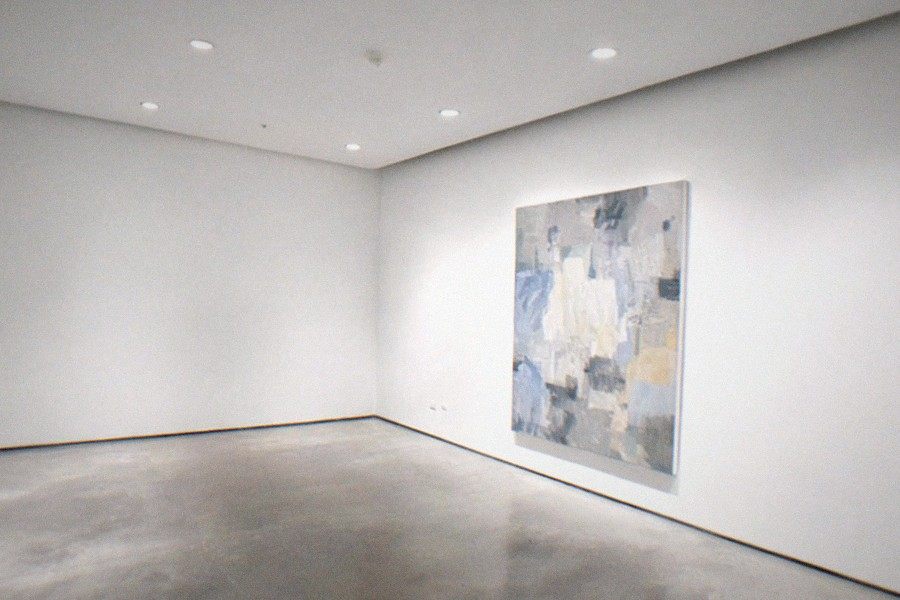
General admission is $0 for all visitors. There is no adult price, no child price, no senior price and no student price, because there is no admission charge at all. The only ticketed items are special exhibitions, where they exist, and those prices are set per show on the museum's own site.
The table below shows what the verified record states. Where a figure depends on a rotating exhibition or on a third-party garage, the entry says so rather than inventing a number.
| Item | Price | Notes |
|---|---|---|
| General admission | Free | Standing policy, no resident ID required |
| Advance reservation | Free | Recommended; on-site tickets limited |
| Special exhibitions | Varies by show | Price on the official site when ticketed |
| Parking | Paid | Commercial Downtown garages; current rates on the official site |
| Geffen Contemporary at MOCA | Closed | Temporarily closed; no tickets of any kind |
It is worth being precise about what a free ticket does and does not get you. The free general admission covers the permanent collection galleries, which hold the museum's post-1940 holdings and rotating installations drawn from them. It does not automatically cover a ticketed special exhibition if one is running during your visit, though many shows are included with general admission. The museum's visit page states the current arrangement for whatever is on view.
There is no Los Angeles CityPASS, and no multi-attraction pass that includes MOCA. Southern California CityPASS covers theme parks and must not be mistaken for a museum pass. The real multi-attraction product in Los Angeles is Go City Los Angeles, but since MOCA is already free, there is no reason to buy any pass to see it. A pass only makes sense in this neighborhood if you are pairing free museums with paid ones elsewhere in the city.
Third-party ticket platforms do not sell MOCA admission because there is nothing to sell. Tiqets, Klook and Trip.com sell no Los Angeles museum tickets at all, so any listing that appears there should be treated with caution. The reservation, when you want one, comes from the museum itself at moca.org/visit.
MOCA Grand Avenue is at 250 South Grand Avenue, Los Angeles, CA 90012, on Bunker Hill in Downtown Los Angeles. It is directly across Grand Avenue from The Broad and about a block from Walt Disney Concert Hall. Metro rail reaches it via the Pershing Square or Civic Center stations, both a short walk uphill.
Transit is the cheapest way in and avoids the parking question entirely. The Metro B and D lines stop at Pershing Square, roughly a five-minute walk up Grand Avenue, and the D line also serves Civic Center station to the north. Schedules, fares and trip planning are at metro.net, the transit authority's own site. Because the museum sits on a hill between the two stations, visitors with mobility concerns should check the accessible routing on Metro's trip planner, as the Grand Avenue approach involves slope.
Arriving by car, the practical reality of Bunker Hill is that parking is paid and run by commercial garages rather than by the museum. There is no MOCA-operated lot with a posted museum rate. The lots surrounding Grand Avenue, including those serving Walt Disney Concert Hall and The Broad, charge Downtown event-driven prices that change by day and by what else is happening at the nearby venues. When a concert or a major opening is on, rates rise. The museum's own visit page at moca.org/visit is the right place to check for any validated or recommended garage arrangements it currently lists, and current garage rates should be confirmed on the official site rather than assumed.
This is the honest cost picture for a free museum: the admission is $0 and the garage can be the most expensive part of the trip. The same trade-off exists at The Getty Center, where admission is free and parking is a flat, posted $25 per car, $15 after 3pm. The difference is that the Getty's rate is fixed and published, while Downtown garage pricing floats with demand, so MOCA visitors benefit more from arriving by train or from checking rates before driving in.
On foot, the museum is easy to fold into a Downtown loop. Grand Central Market, Angels Flight Railway and the Bradbury Building are all downhill from the museum's doorstep, and the whole corridor is walkable. Visitors who want the neighborhood explained rather than just traversed can join the one free walking tour that exists in Los Angeles, the Free Tour of Downtown LA, a two-hour pay-what-you-want walk that passes The Broad, Walt Disney Concert Hall, Angels Flight, City Hall, Grand Central Market, the Bradbury Building and Olvera Street. You can book the free slot in advance and tip the guide at the end; it is the only English-language free tour listed for the city.
Parking at MOCA Grand Avenue is paid and handled through commercial Downtown garages, not a museum lot. There is no verified MOCA parking figure to quote, and any specific price should be confirmed on the official site or with the garage itself before arriving. Rates in Bunker Hill move with events at the neighboring venues.
This is the part of the visit where a free museum stops being free, and it deserves honest treatment. The garages around Grand Avenue serve Walt Disney Concert Hall, The Broad, the Dorothy Chandler Pavilion and the office towers of Bunker Hill, and their pricing reflects that shared demand. A quiet Tuesday morning and a concert night are two different parking economies. Practical strategies follow from that: arrive early on weekdays, check whether anything is scheduled at the concert hall that evening, and consider the Metro stations described above if the garage quotes look high.
For visitors comparing free museums by their parking costs, the contrast across the city is instructive. The Getty Center charges a flat $25 per car, dropping to $15 after 3pm, and the Getty Villa matches it. The Hammer Museum in Westwood runs roughly $8 to $9 for the first hours with validation, with a daily maximum around $22 to $30. Those are hedge-worthy approximations from single sources, not certainties. For MOCA, no comparable figure exists in the verified record, so the honest answer is: parking is paid, check the current rate on the museum's site or with the garage before you drive in.
Two practical notes worth adding. First, because MOCA and The Broad face each other across Grand Avenue, one parking decision covers both museums on the same visit, which is the single best way to extract value from a Downtown garage fee. Second, if a garage offers a concert-hall or venue validation, ask whether it applies to museum visits too; policies differ by garage and by day, and the answer changes the arithmetic. Neither note changes the headline: budget for parking, because the art will not cost you anything.
MOCA Grand Avenue is closed on Mondays. It is open the rest of the week, though exact daily hours are posted on the museum's own visit page and should be checked before traveling, as they change seasonally and around installations. There is no late-night standing schedule that can be quoted with confidence.
The Monday closure matters more in this neighborhood than it would elsewhere, because The Broad across the street is also closed on Mondays. A visitor who plans a Downtown museum day for a Monday finds both free art museums dark, and should aim for Tuesday through Sunday instead. The table below gathers the verified facts about the visit in one place.
| Detail | Value |
|---|---|
| Address | 250 South Grand Avenue, Los Angeles, CA 90012 |
| Area | Downtown, Bunker Hill |
| Closed day | Monday |
| Hours | On the official site |
| Admission | Free, advance reservation recommended |
| Parking | Paid, commercial Downtown garages; rates on the official site |
| Time to allow | About 1 to 2 hours for the galleries |
| Nearest free neighbor | The Broad, directly across Grand Avenue |
One closure that trips up many itineraries is the Geffen Contemporary at MOCA, the museum's second, larger exhibition space in Little Tokyo. It is temporarily closed, so no visit to it is currently possible, and any guide describing a two-location MOCA day is out of date. Everything MOCA currently offers the public is at the Grand Avenue building. Check the museum's visit page for the reopening status rather than planning around it.
For planning a wider free-museum day in Los Angeles, the closed days are the constraint that shapes the itinerary. The Getty Center closes Monday, the Getty Villa closes Tuesday, and MOCA and The Broad both close Monday. A Tuesday-through-Sunday trip can pair MOCA with almost anything; a Monday trip in Downtown finds the free art museums shut and should look elsewhere in the city.
MOCA Grand Avenue is the only Los Angeles museum devoted entirely to contemporary art, and its permanent collection holds major works from 1940 onward, including pieces by Jackson Pollock, Mark Rothko, Claes Oldenburg and Jean-Michel Basquiat. Rotating installations drawn from that collection mean the galleries change, so no single object list stays current.
The building itself is part of the experience. The curved sandstone facade opens into a sequence of naturally lit galleries, and the scale suits the large-format work the museum collects. Because the collection is deep and the floor space is finite, only a fraction is on view at any time, and the museum rotates what hangs. That is a reason the free admission is worth repeating visits rather than a one-off: the permanent collection galleries do not look the same from season to season.
The practical way to use the museum is to pair it with The Broad across the street. The Broad is free too, with free timed tickets released monthly that go quickly, and its contemporary holdings complement MOCA's. A visitor can reserve both in advance, park once, and spend a full afternoon moving between two free contemporary art museums separated by a single street crossing. Add Walt Disney Concert Hall's exterior, walkable in minutes, and the Grand Avenue cultural corridor makes one of the most efficient free art days in the country.
Visitors with more time in the city can extend the free-art itinerary westward. The Getty Center in Brentwood holds European painting and sculpture in a hilltop complex, free with a timed reservation and $25 parking. The Getty Villa in Pacific Palisades offers Greek and Roman antiquities on the same free-admission terms, closed Tuesdays. Neither is walkable from Downtown, but both reward the drive for a visitor building a multi-day museum trip around the free entries. The Free Tour of Downtown LA, Free Tour of Downtown LA (2 Hrs), is a good way to bookend the MOCA visit with the surrounding neighborhood's architecture and history, ending within walking distance of the museum's front door.
Inside the museum, allow about one to two hours for the galleries at a normal pace, longer if a special exhibition is running. The museum store is worth a few minutes for its art-book selection. Photography policies vary by gallery and by loan agreement, so check signage or ask staff before shooting. And because admission is free, there is no sunk cost to a short visit: a lunch-hour stop is entirely reasonable, which is not something that can be said for most of the city's larger museums.
Yes. General admission to MOCA Grand Avenue is free for all visitors, with no resident requirement or time-of-day restriction. The museum recommends an advance reservation because on-site tickets are limited, and the reservation is also free. The only paid items are parking in commercial Downtown garages and any separately ticketed special exhibition.
You do not need to pay for one, but the museum recommends an advance reservation, which is free, because on-site tickets are limited on busy days. Reservations are made through the museum's own visit page at moca.org/visit. Walking up without one is possible but risks a wait or being turned away at peak times.
MOCA Grand Avenue is closed on Mondays. Note that The Broad, directly across Grand Avenue, is also closed on Mondays, so a Downtown free-museum day should be planned for Tuesday through Sunday. Exact opening hours are posted on the museum's official site.
Parking is paid and handled through commercial Downtown garages, not a museum-operated lot, and no verified MOCA parking figure exists to quote. Rates in Bunker Hill vary with events at the nearby concert halls. Confirm current rates on the museum's official site or with the garage before arriving, or take Metro to Pershing Square or Civic Center instead.
No. The Geffen Contemporary at MOCA, the museum's second location in Little Tokyo, is temporarily closed. All of MOCA's currently accessible galleries are at the Grand Avenue building at 250 South Grand Avenue. Check the museum's visit page for reopening news before planning a two-location visit.
Allow about one to two hours for the permanent collection galleries at a normal pace, longer if a special exhibition is running. Because admission is free, shorter visits are easy to justify. Many visitors pair MOCA with The Broad across the street, parking once and spending a full afternoon between the two.
Yes, and it is the most efficient free art day in Downtown Los Angeles. The two museums face each other across Grand Avenue, both offer free general admission, and both are closed on Mondays. The Broad's free timed tickets are released monthly and go quickly, so reserve those in advance; MOCA recommends its own free advance reservation for the same reason.
No. There is no Los Angeles CityPASS, and Southern California CityPASS covers theme parks, not museums. Since MOCA Grand Avenue is free anyway, no pass is needed to visit. The real multi-attraction product in Los Angeles is Go City Los Angeles, which is only worth considering for paid attractions elsewhere in the city.
Pacific Palisades
The Getty Villa is free with a timed reservation. Parking is $25 per car, $15 after 3pm. See prices, hours, what to see and how to plan a visit.
Free entry, no ticket needed.
Brentwood
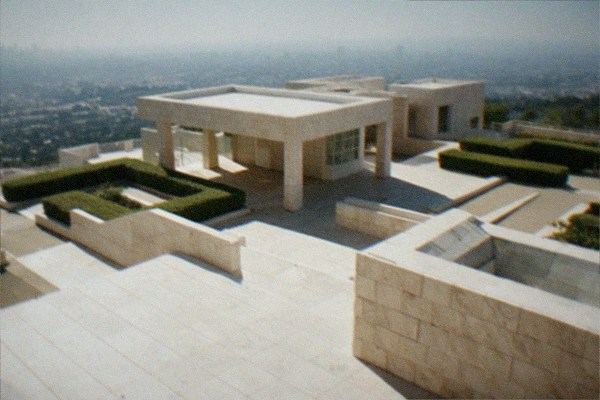
The Getty Center is free to enter with a timed reservation. Parking is $25 per car, $15 after 3pm. Here is what to expect, how to get there and how long to allow.
Free entry, no ticket needed.
Miracle Mile
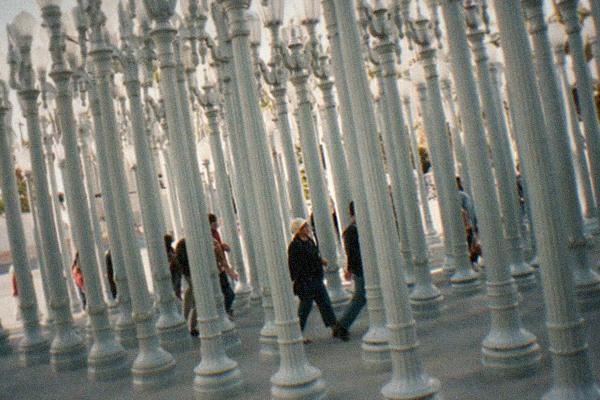
LACMA tickets cost $30 at the door, $25 for LA County residents, and free on weekdays after 3pm with ID. Closed Wednesdays. Parking and transit options explained.
Official tickets →