Where Do You Park At The La Brea Tar Pits?
Parking at the La Brea Tar Pits explained: the Museum Row lot, the street options on Wilshire and Curson, and the free walk-in entrances to Hancock Park.
The La Brea Tar Pits occupy one of the strangest pieces of real estate in Los Angeles: a working Ice Age fossil site in the middle of Wilshire Boulevard's Museum Row, with bubbling asphalt visible from the sidewalk and a mastodon family standing in the Lake Pit. Millions of visitors walk past it every year, and a large share of them arrive by car, because this stretch of Wilshire is not easy to cover on foot from anywhere you would sleep.
That creates the question this article answers. The tar pits sit inside Hancock Park, which is free to walk into from several directions, but the museum experience most people picture, the excavator tour and the indoor galleries, has its own entrance, its own lot and its own rules. And the indoor part has a complication: the museum building is closed for renovation, which changes what you are parking for in the first place.
Where Do You Park At The La Brea Tar Pits?
The main option is the paid Museum Row parking lot at the corner of Wilshire Boulevard and Curson Avenue, which serves the tar pits site directly and sits within a short walk of the Petersen Automotive Museum and the Academy Museum of Motion Pictures. Current rates are listed on the museum's own site, and free street parking can sometimes be found on Curson Avenue and side streets south of the park.
Three layers of parking surround the tar pits, and mixing them up is the single most common mistake. The first layer is the dedicated lot on the museum block, the one most navigation apps drop you at when you type in the address, 5801 Wilshire Boulevard. It is the closest legal parking to the Lake Pit and the excavation sites, and it is the one to use if you are buying a ticket for the outdoor excavator tour, because the tour meeting point is on the park grounds a couple of minutes from the lot entrance.
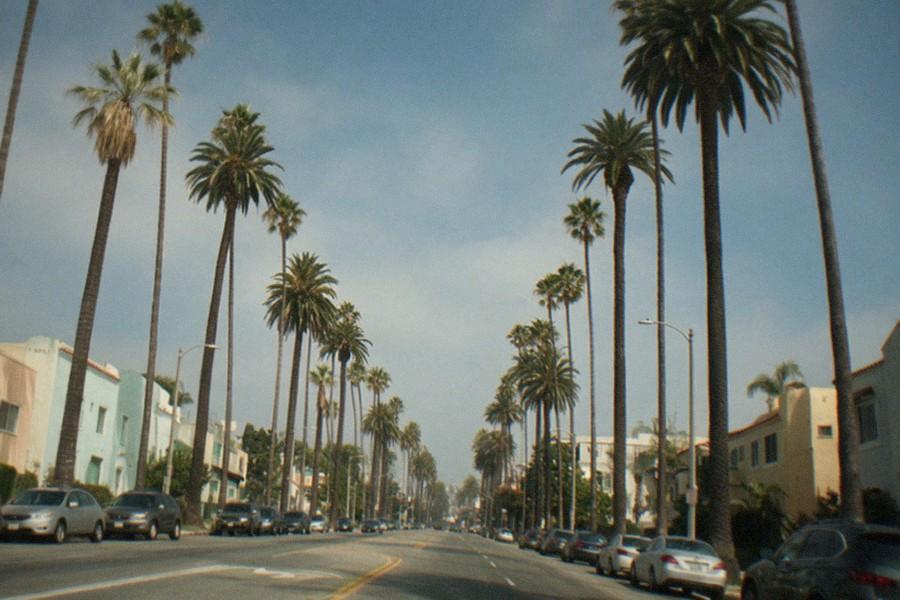
The second layer is street parking. Curson Avenue runs along the western edge of Hancock Park, and the residential streets south of Wilshire around 6th Street have metered and permit blocks mixed together in a way that catches visitors out. Meters on the Wilshire frontage are the most convenient but the most contested, because everyone visiting the tar pits, the Petersen and the Academy Museum wants the same short strip. Read the signs carefully on the side streets: some blocks are permit-only for residents, and Los Angeles parking enforcement does not issue warnings.
The third layer costs nothing at all, and almost nobody mentions it. Hancock Park, the lawn and walkway network that contains the tar pits, the Lake Pit and the observation excavations, is a public park with pedestrian entrances from the sidewalk. If your plan is to see the outdoor pits, the sculptures and the bubbling lake, you can park anywhere legal in the neighborhood, or get dropped off, and walk in. The park is the attraction as much as the museum is, and it never closes behind a gate.
| Option | Where it is | What it costs | Best for |
|---|---|---|---|
| Museum Row lot | Wilshire Boulevard at Curson Avenue | Paid, current rate on the museum's own site | The excavator tour and the closest access to the Lake Pit |
| Curson Avenue meters | Western edge of Hancock Park | Metered, limited duration | Short visits and weekday mornings |
| Side streets south of Wilshire | Residential blocks around 6th Street | Meters mixed with permit zones, check every sign | Budget parking when you have time to circle |
| Walk-in park entrances | Sidewalk edges of Hancock Park | Free | Seeing the outdoor pits without a ticket |
The lot is the default for a reason, but it is not the only honest answer. Families with young kids, anyone with limited mobility, and anyone booked on a timed tour should take the lot and treat the fee as part of the ticket. Visitors who mainly want the photo at the Lake Pit and a walk through the park can skip it entirely.
A practical way to choose is to work backwards from your ticket. If the excavator tour is on your itinerary, plan on the lot, because the meeting point sits on the park grounds a couple of minutes from the lot entrance, and arriving from street parking adds a walk along Curson or the side streets before you even reach the gate. If you have no timed entry at all, the free walk-in route through Hancock Park removes both the fee and the circling for meters, and the same entrances serve the outdoor pits, the sculptures and the Lake Pit.
One more thing worth planning around: the same lot and the same Wilshire-frontage meters serve the Petersen and the Academy Museum, not just the tar pits. Demand for that short strip of convenient spaces comes from all three destinations at once, so a weekday morning gives you the best odds on the Curson Avenue meters, while anyone with time to circle the residential blocks around 6th Street can usually find a legal space if they check every sign for permit restrictions.
How Much Does Parking Cost Near The Tar Pits?
Parking at the La Brea Tar Pits lot is paid, but the current rate is not in this site's verified research, so check the museum's own site for the exact price rather than relying on a guess here. For comparison, the Petersen's listing states its ticket price excludes a $17 parking fee, and the Getty campuses charge $25 per car, dropping to $15 after 3pm.
That comparison is more useful than it sounds, because Museum Row parking decisions are almost always multi-museum decisions. The stretch of Wilshire between Fairfax and Curson holds the tar pits, the Petersen and the Academy Museum, with LACMA's campus a few blocks east. If you are doing two or three of them in a day, one parking payment and a walk beats three separate arrivals, and the arithmetic of the day changes which lot makes sense.
The Petersen's $17 figure is worth a second look because of how it is sourced: it appears in the operator's own listing as an exclusion, meaning the fee is charged separately from the ticket. Treat it as approximate and confirm before you go, because single-source parking figures drift. The same caution applies to the tar pits lot. Los Angeles museums update parking rates without much publicity, and third-party pages that quote a number are frequently quoting one that is years old, which is exactly the failure this site exists to avoid.
For the museums where no verified figure exists, the rule is simple: check the museum's own parking page before you leave. The Getty institutions set the standard here, with the Getty Center's official parking page listing its rates, hours and transit options in one place. The tar pits and the other Museum Row institutions publish their current rates the same way, on their own sites, and that is the only source worth trusting on the morning of a visit.
What can be said with confidence is the shape of the cost. Expect to pay for the lot, expect meters on Wilshire and Curson to be cheaper per hour but harder to get, and expect the free option, walking in from the neighborhood, to cost you nothing but time. Anyone who tells you parking at the tar pits is free is describing the park entrances, not the lot, and the two get conflated constantly in reviews and forum threads.
Can You Park Free At The Tar Pits?
Yes, in a specific and limited sense: Hancock Park itself is free to enter on foot from the sidewalk, so parking anywhere legal in the surrounding neighborhood and walking in costs nothing beyond the meter or the residential walk. The Museum Row lot is not free, and there is no validated free parking for the excavator tour. Free parking directly adjacent to the tar pits does not exist in any form this site can verify.
The free route works like this. The park's walkways connect to the sidewalks on Wilshire, on Curson and along the southern edge near 6th Street. The Lake Pit, the mammoth and mastodon sculptures, and the fenced observation excavations are all visible from the public paths. None of that requires a ticket, a reservation or a parking validation. It is the same arrangement as Griffith Observatory's grounds, where the building is free and the paid element is the show inside, except here the paid element is the guided outdoor excavator tour rather than a planetarium.
The catch is that free parking near the park is competitive. The residential streets south of Wilshire fill early on weekends, and the permit zones are enforced strictly. Weekday mornings are the realistic window: meters turn over, the tour crowds are thinner, and a fifteen minute walk from a legal curb is a fair trade for skipping the lot fee. Arrive after midday on a Saturday and the calculus reverses, because circling for a curb can burn more of a vacation than the parking fee would have.
One more practical note. Rideshare and drop-off work well here, better than at most LA museums, because the Wilshire frontage has curb space and the park entrances are right there. For a family doing Museum Row without a rental car, drop-off at Curson plus a walk through the park is a genuinely pleasant arrival, and it makes the parking question disappear entirely.
What Is Actually Open While The Museum Building Is Renovated?
The indoor museum building at the La Brea Tar Pits is closed for renovation, and no part of this article should be read as describing an indoor gallery visit. What remains open is the outdoor experience: Hancock Park's paths, the Lake Pit, the observation excavations, and the outdoor excavator tour that walks visitors through the active fossil sites. Parking for that outdoor experience follows everything described above, and the renovation changes what you are parking for, not where you park.
This is the fact most existing guides get wrong, and it matters for parking because it changes the length of a visit. An indoor museum visit could fill half a day; the park and the excavator tour fill a morning or an afternoon. If you are paying for the Museum Row lot by the hour, a shorter visit changes whether the lot or a cheaper curb further away is the better deal.
The excavator tour is the product worth booking ahead. It takes visitors out to the active dig sites with a guide, which is the only way to understand what you are looking at, because the pits themselves look like puddles until someone explains the asphalt seeps, the trapped megafauna and the century of continuous excavation. Slots for the outdoor tour go first on weekends, and the tour's availability is the scarce resource here, not the parking.
For a fuller picture of whether the site justifies your time under the renovation, the companion piece on whether the tar pits are worth visiting covers the outdoor experience in detail, and the roundup of the best museums in Los Angeles places the tar pits in the wider Museum Row context.
Is One Parking Spot Enough For A Whole Museum Row Day?
Yes, and that is the smartest way to play this stretch of Wilshire. The tar pits, the Petersen Automotive Museum and the Academy Museum of Motion Pictures sit within roughly a ten minute walk of one another, with LACMA a few blocks further east. Parking once at the Museum Row lot, or at any single legal spot, and walking between them beats re-parking at every stop, both in cost and in sanity.
The walking geometry is the hidden advantage. From the tar pits lot at Curson, the Petersen's striking stainless steel building is directly across Wilshire, and the Academy Museum's sphere is a block east. None of these require moving a car. A family can spend a morning at the tar pits, cross the street for lunch and the Petersen's vault-level car exhibits, and finish at the Academy Museum's film galleries without once feeding another meter. The Academy Museum parking guide covers the eastern end of the row, and the two articles together cover the whole corridor.
The Petersen deserves special mention for car enthusiasts, because it is the one museum on this row where the parking and the collection are the same subject. Its listing quotes a $17 parking fee as an exclusion from the ticket, and its galleries, including the Vault, celebrate exactly the machines you arrived in. For a visitor structuring the day around vehicles, parking once at the Petersen and walking west to the tar pits is the natural order.
Timing the day matters as much as the spot. The tar pits' outdoor tour runs on a schedule, the Petersen is open daily, and the Academy Museum closes on Tuesdays, so a Tuesday visit shrinks the row to two stops. Weekday afternoons are the quiet window for the whole corridor, and they also happen to be when the Getty's parking drops to $15 after 3pm, a pattern several LA institutions follow in softer forms. As Los Angeles Museums reports throughout its guides, the LA pattern is that the museum is often free or cheap and the parking is where the visit gets expensive, and Museum Row is the purest example of that rule in the city.
What Should Your Parking Plan Look Like In Practice?
For a timed-tour visit, park in the Museum Row lot at Wilshire and Curson, confirm the current rate on the museum's own site that morning, and book the outdoor excavator tour before you drive. For a budget visit, target a weekday morning, take a legal curb south of the park, and walk in through the free park entrances. For a full Museum Row day, park once and walk between the three museums, checking each closed day first.
The plan differs by visitor type more than by budget. A family with a booked tour should not be circling residential streets; the lot fee is trivial against the risk of missing a timed start. A solo traveler or a couple with a loose schedule can absolutely save the money, because the park is free and the walk is part of the experience. And anyone combining museums should think of parking as a once-per-day decision, not a once-per-museum one.
One last habit is worth forming for all of LA, not just this block: never trust a parking figure printed on a third-party page, including this one where it declines to print one. Rates change, lots get repurposed for construction, and the renovation at the tar pits is exactly the kind of project that reshuffles a lot's capacity and pricing mid-stream. The museum's own site, read the morning you go, is the only source that keeps up. Bring quarters or a card for the meters either way, and treat a ten minute walk from a free curb as the discount it is.
Common Questions About La Brea Tar Pits Parking
Where Do You Park At The La Brea Tar Pits?
The main option is the Museum Row lot at Wilshire Boulevard and Curson Avenue, a short walk from the Lake Pit and the excavator tour meeting point. Street parking exists on Curson and the surrounding blocks, and Hancock Park itself can be entered free on foot from the sidewalk, so a legal curb anywhere in the neighborhood works if you are willing to walk.
Is Parking At The La Brea Tar Pits Free?
The lot is paid, and the current rate is on the museum's own site. The park is free to walk into, so parking elsewhere and entering on foot costs nothing beyond the meter. Free parking directly beside the tar pits is not something this site can verify.
Can You Walk Into Hancock Park Without A Ticket?
Yes. The park's paths, the Lake Pit, the sculptures and the fenced observation excavations are all visible from public walkways at no cost. The paid element is the outdoor excavator tour, which takes visitors out to the active dig sites with a guide.
Is The Museum Building Open?
No. The indoor museum building is closed for renovation. Hancock Park, the Lake Pit and the outdoor excavator tour remain open, and parking for them follows the same options described above.
Can You Park Once And Visit The Other Museum Row Museums?
Yes. The tar pits, the Petersen Automotive Museum and the Academy Museum of Motion Pictures sit within roughly a ten minute walk of one another, with LACMA a few blocks east. Parking once and walking between them is cheaper and easier than re-parking at every stop.
When Is Parking Hardest To Find?
Weekend afternoons, when the meters on Wilshire and Curson fill early and the residential side streets tighten up. Weekday mornings are the easiest window, with more turnover and thinner tour crowds.
Does The Excavator Tour Include Parking?
No validated or included parking is recorded for the tour. Plan on the Museum Row lot or a legal street spot, and check the museum's own site for the current lot rate before you go.